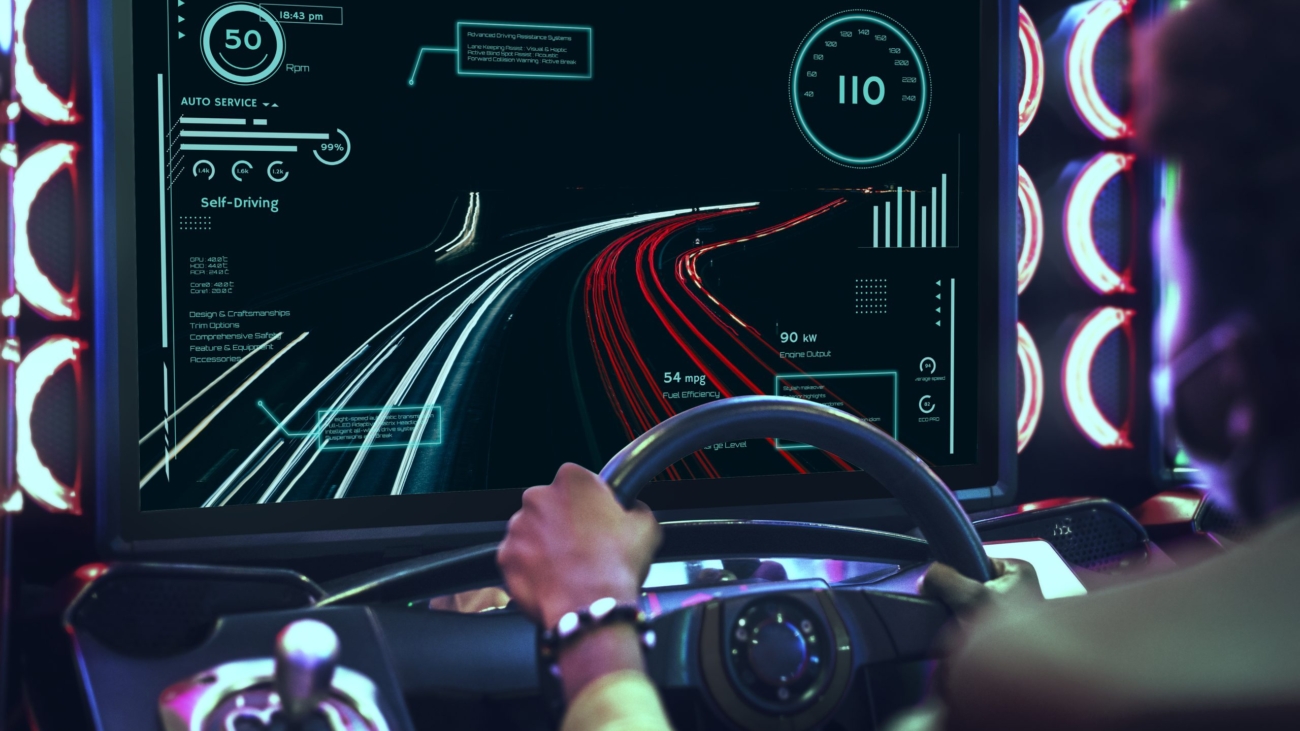
A modern electric vehicle is not controlled entirely by mechanical components. Software has become deeply integrated into the way the vehicle charges, accelerates, manages its battery, controls climate systems, monitors safety features, and communicates information to the driver.
This shift changes the concept of what a vehicle actually is.
Mechanical engineering remains essential, but software now determines how many physical systems behave.
A Network of Electronic Controllers
An electric vehicle contains numerous electronic control systems.
These systems monitor temperatures, battery voltage, motor speed, wheel rotation, accelerator position, braking behavior, charging conditions, and many other variables.
The collected data allows the vehicle to make rapid adjustments.
For example, when the driver presses the accelerator, software can determine how much torque should be requested from the motor while considering battery temperature, traction, speed, and system limits.
The process happens in fractions of a second.
Battery Management Is Software-Driven
The battery management system is one of the most important software-controlled systems in an electric vehicle.
It monitors individual cells or groups of cells and helps maintain safe operating conditions.
It can influence charging power, regenerative braking, available performance, and thermal management.
The displayed battery percentage is also an estimate generated from measured electrical characteristics and system calculations.
This explains why the battery percentage is not simply a mechanical measurement like the height of liquid inside a transparent tank.
Software Updates Can Change Behavior
Electric vehicles can receive software updates that modify system behavior.
Updates may improve user interfaces, adjust energy management, change charging strategies, correct faults, or add functionality.
This creates a different ownership experience from traditional vehicles.
In some cases, a vehicle can gain capabilities or improvements without major physical modifications.
However, software updates can also introduce new interfaces or behavioral changes, which means drivers may need to become familiar with revised controls.
Digital Displays Replace Traditional Instruments
Many electric vehicles rely heavily on digital screens.
Instead of conventional gauges, drivers may see continuously changing estimates for energy consumption, range, regenerative braking, charging speed, and other information.
These displays can provide detailed insight into vehicle behavior, but excessive information can also become distracting.
Good interface design therefore matters. The driver should be able to understand essential information quickly without taking unnecessary attention away from the road.
Predictive Systems and Connected Features
Some vehicles use navigation and sensor information to anticipate upcoming conditions.
The system may recognize elevation changes, traffic conditions, charging locations, or speed restrictions and adjust energy-management strategies accordingly.
Connected systems can also provide remote access to charging status, cabin temperature, or vehicle location.
These capabilities create convenience but also introduce questions about data handling, connectivity, cybersecurity, and system reliability.
The Importance of Cybersecurity
As vehicles become increasingly connected, protecting electronic systems becomes more important.
A vehicle contains networks that communicate between controllers and sensors. Manufacturers use security measures to protect these systems from unauthorized access.
Cybersecurity is no longer limited to computers and smartphones. It has become part of automotive engineering.
Future vehicles will likely depend even more heavily on secure software architecture.
The Vehicle as a Moving Computer
Calling an electric vehicle a "computer on wheels" is an oversimplification because mechanical systems remain fundamental.
Nevertheless, the comparison highlights a real transformation.
Software now influences how energy is managed, how performance is delivered, how charging occurs, and how information reaches the driver.
The future of electric mobility will therefore be shaped not only by better batteries and motors but also by better algorithms, interfaces, sensors, and digital infrastructure.