The battery is the defining component of an electric vehicle. It stores the energy that ultimately moves the wheels, powers climate systems, supports onboard electronics, and makes the entire vehicle function without a conventional combustion engine. Yet from the outside, a battery pack appears surprisingly simple: a large enclosed unit mounted beneath the vehicle.
Inside, however, thousands of individual processes are taking place.
Understanding how an electric vehicle battery works helps explain charging behavior, driving range, temperature management, degradation, and many of the differences between electric and combustion-powered vehicles.
From Cells to a Complete Pack
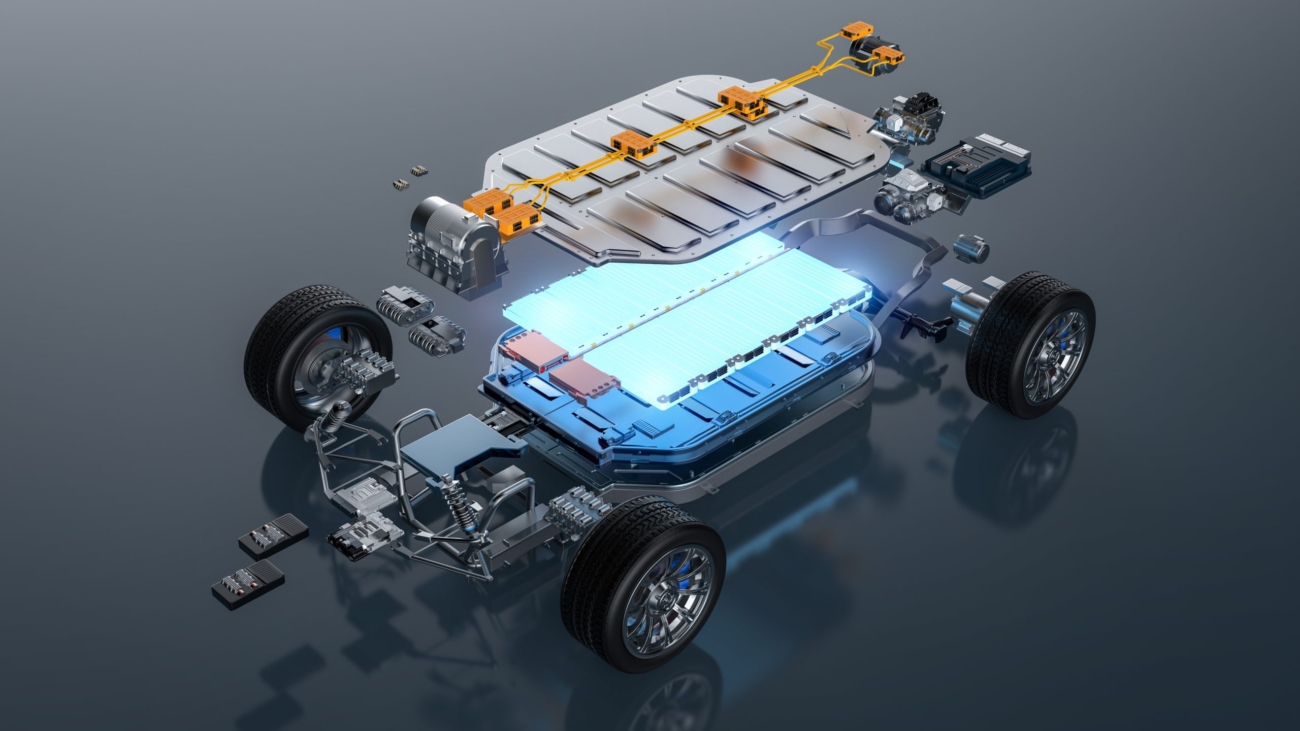
An electric vehicle battery is not one enormous cell. It is a collection of many smaller battery cells connected together.
These cells are organized into modules or other structural arrangements, depending on the vehicle’s design. The complete battery pack also contains electrical connections, sensors, cooling components, protective structures, and electronic control equipment.
The battery management system monitors important characteristics such as voltage, temperature, and state of charge. It helps keep individual cells operating within appropriate limits.
This monitoring is essential because the cells must work together as a coordinated system. Differences between individual cells can influence the overall performance of the pack.
Why Temperature Matters
Battery chemistry is sensitive to temperature.
Very cold conditions can temporarily reduce the amount of power available and may increase charging times. Extremely high temperatures can also affect battery performance and accelerate unwanted chemical processes.
For this reason, many electric vehicles use thermal management systems. Depending on the design, these systems can heat or cool the battery to maintain a more suitable operating range.
Some vehicles can prepare the battery before arriving at a fast charger. This process, often called battery preconditioning, can improve charging performance when conditions require additional heating or cooling.
Temperature management is therefore not simply a comfort feature. It is an important part of battery operation.
Why Batteries Lose Capacity
Battery degradation is a gradual process rather than an instant failure.
Over many charging and driving cycles, chemical changes occur inside the cells. Repeated exposure to very high or very low states of charge, extreme temperatures, and high-power charging can influence long-term battery behavior.
However, degradation is not necessarily uniform across all vehicles. Battery chemistry, thermal management, charging habits, driving conditions, and software strategies all contribute.
A battery that has lost some capacity can continue to function normally. Its practical range may simply become somewhat lower than when it was new.
Charging Is More Than Filling a Tank
Electric vehicle charging behaves differently from conventional refueling.
Charging speed is influenced by battery temperature, current state of charge, charger capability, vehicle limitations, and the battery’s charging curve.
A battery may accept high power when its state of charge is relatively low and gradually reduce charging power as it becomes fuller. This protects the battery and manages heat.
As a result, the time required to charge from a low state of charge to a moderate level can be very different from the time needed to charge from a moderate level to nearly full.
The Role of Battery Chemistry
Not all batteries use identical chemistry. Different technologies can emphasize different characteristics, including energy density, thermal behavior, durability, charging performance, cost, and material requirements.
Research continues into improved lithium-based chemistries as well as alternative approaches such as solid-state battery concepts.
No single battery chemistry solves every challenge. Increasing energy density may introduce different engineering requirements, while prioritizing longevity or material availability can involve other trade-offs.
Looking at the Battery as a System
The most useful way to understand an electric vehicle battery is not simply as an energy container. It is a complete engineered system.
Cells, cooling equipment, sensors, software, electrical components, and structural elements work together to manage stored energy safely and efficiently.
As battery technology develops, improvements are likely to come from many directions rather than from one dramatic breakthrough. Better chemistry, smarter software, improved thermal management, more efficient manufacturing, and stronger recycling processes can all contribute to the next generation of electric mobility.