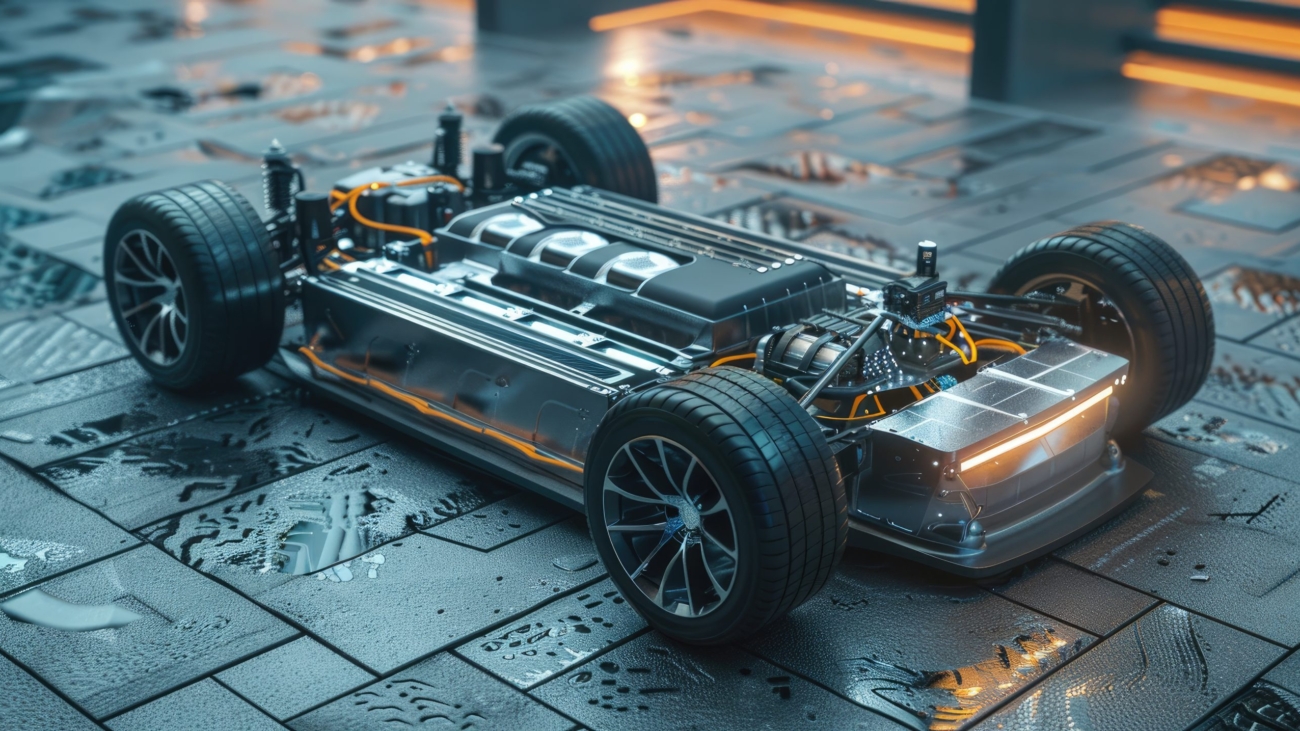
An electric vehicle battery can remain useful long after it no longer provides the same range or performance expected from a new vehicle.
This raises an important question: what happens when a battery reaches the end of its first automotive life?
The answer is more complicated than simply throwing the battery away. Depending on its condition, chemistry, construction, and available processing technology, an aging battery can potentially be repaired, reused, repurposed, or recycled.
Battery Life Does Not End When Range Declines
Battery degradation is gradual.
A battery may lose part of its original energy-storage capacity over years of use, but that does not automatically make it useless.
An electric vehicle designed for a certain driving range may eventually become less convenient if its usable capacity declines significantly. However, the remaining cells can still contain valuable materials and usable electrochemical capacity.
The difference between automotive suitability and complete failure is important.
Repairing Battery Packs
Not every battery problem requires replacement of the entire pack.
In some designs, individual modules or components can potentially be diagnosed and replaced.
Repairability depends heavily on battery architecture, accessibility, manufacturer procedures, diagnostic equipment, and the nature of the failure.
A damaged battery should only be inspected or repaired by appropriately trained professionals because high-voltage systems can present serious electrical hazards.
Second-Life Applications
A battery that is no longer ideal for vehicle use may still work effectively in stationary energy storage.
Stationary systems do not require the same combination of weight, compactness, acceleration capability, and range demanded by a vehicle.
A battery with reduced automotive capacity could potentially store electricity in a building, support renewable energy systems, or provide backup power.
These applications are often described as second-life uses.
The feasibility depends on battery condition, remaining capacity, safety, economics, and the technical requirements of the new application.
Recycling Valuable Materials
Eventually, recycling becomes an important part of the battery lifecycle.
Modern batteries contain materials that can be recovered and processed for future use. Recycling methods vary according to chemistry and facility capabilities.
Some processes focus on recovering metals and other valuable components, while newer approaches aim to improve recovery efficiency and reduce energy requirements.
Effective recycling can reduce the need to obtain all future battery materials exclusively from new sources.
Battery Design and Recycling
The way a battery is designed can influence how easily it can be serviced or recycled.
Complex construction may improve structural strength or manufacturing efficiency while making disassembly more difficult.
Engineers therefore face multiple objectives when designing battery packs: energy density, safety, durability, cost, weight, manufacturing speed, repairability, and eventual recycling.
There is no single design that maximizes every characteristic simultaneously.
Why Battery Recycling Is Becoming More Important
As the number of electric vehicles grows, increasing quantities of batteries will eventually reach the later stages of their useful life.
This creates a new industrial challenge.
Recycling systems must be capable of handling different battery chemistries, pack designs, and levels of degradation. Collection, transportation, disassembly, material separation, and processing all require specialized infrastructure.
The industry is therefore developing alongside the vehicles themselves.
Thinking in Terms of a Full Lifecycle
The environmental and economic impact of an electric vehicle cannot be understood solely by looking at the moment it is driven.
The complete lifecycle includes raw materials, manufacturing, operation, maintenance, battery reuse, and recycling.
Extending battery usefulness through repair or second-life applications can potentially delay final recycling while creating additional value from existing materials.
Ultimately, the goal is not simply to build batteries that last longer in vehicles. It is to create systems in which valuable battery materials remain useful for as long as technically and economically practical.